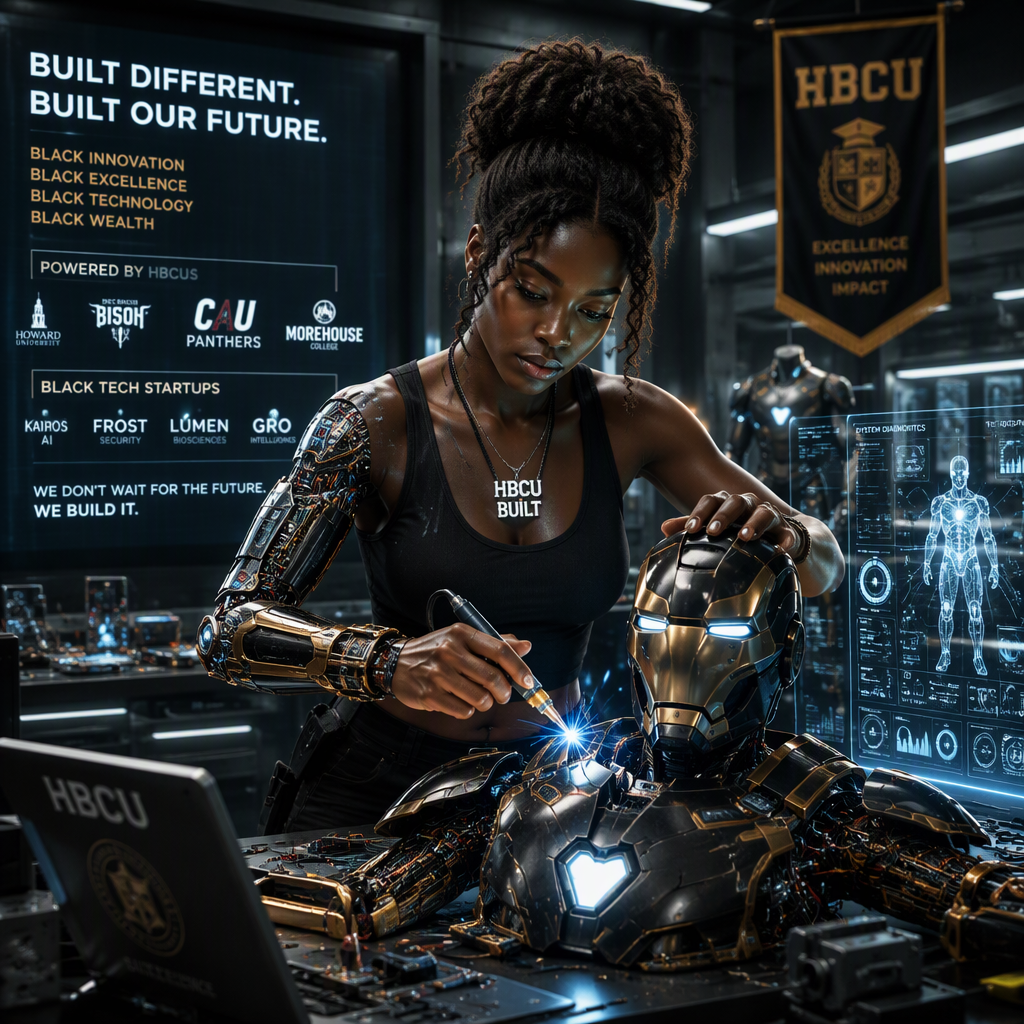
AI Generated — Azure OpenAI / gpt-image-2
🤖 Innovators Reclaiming Tech
HBCU grads are out here building the future, and the tech world is finally noticing what Black institutions have known all along: innovation thrives where culture and community are central. These startups aren’t just breakthroughs—they’re receipts for decades of Black ingenuity dismissed by the mainstream.
🚀 Legacy of Revolution
Let’s be clear: these ten startups aren’t just stories of individual brilliance or entrepreneurial hustle. They’re a continuation of a legacy—a testament to the undeniable fact that HBCUs have always been incubators of Black excellence, especially in spaces where the system wasn’t designed for us to thrive. Tech, in particular, is a battlefield. It’s one of the last frontiers where gatekeepers cling to their power with a death grip, rationing out venture capital like it’s oxygen. So when HBCU grads break through with game-changing companies, it’s not just impressive—it’s revolutionary.
We hear about Silicon Valley’s “disruption” all the time, but for Black founders, the real disruption isn’t just about creating the next app or platform. It’s about disrupting the idea that innovation belongs to white spaces. These startups are not anomalies—they’re part of a broader narrative about Black ingenuity meeting Black resilience. HBCUs have been doing this work since the first classrooms opened their doors during Reconstruction. They taught us to build, innovate, and lead even when the world told us we weren’t supposed to. That spirit—that unapologetic commitment to excellence—is baked into every one of these companies.
Still, let’s not romanticize this too much. To build a tech company as a Black founder is to be in a constant state of resistance. Venture capital dollars don’t flow to Black entrepreneurs the way they should. Studies show that less than 2% of VC funding goes to Black-led startups, and most of that funding is concentrated in the hands of only a few well-connected founders. That means HBCU graduates who step into this space are often navigating a system that’s stacked against them, even before their ideas have a chance to flourish. They’re not just trying to outthink the competition—they’re trying to outlast the bias.
And yet here we are. These founders are creating solutions that directly impact our communities, whether it’s fintech platforms that help us build generational wealth, health tech innovations that address disparities in care, or apps that amplify Black voices in media. What sets these companies apart isn’t just their technology—it’s their perspective.
To build a tech company as a Black founder is to be in a constant state of resistance. Venture capital dollars don’t flow to Black entrepreneurs the way they should. Studies show that less than 2% of VC funding goes to Black-led startups, and most of that funding is concentrated in the hands of only a few well-connected founders.
They see us. They design for us. They innovate with us in mind, and that’s a kind of brilliance you don’t get from a Stanford MBA or a Silicon Valley incubator. You get it from lived experience. You get it from knowing what your community needs because you come from it.
But here’s the rub: celebrating these startups isn’t enough. We need infrastructure. We need ecosystems that nurture Black innovation long before someone’s pitching their Series A. HBCUs are doing their part, and then some—they’ve been producing tech visionaries like it’s second nature. But where’s the matching energy from the VC firms, the accelerators, the angel investors? Where’s the commitment to breaking the cycle of exclusion that keeps Black founders on the margins of an industry we helped shape?
This is the “so what” moment. These startups are a blueprint, not an exception. If HBCU grads can build revolutionary companies with limited resources, imagine what they could do with full access to the tools, networks, and funding their white counterparts take for granted. These ten founders aren’t just building companies—they’re building possibilities. They’re showing us what the future could look like when Black brilliance is allowed to thrive, unencumbered by systemic bias.
The takeaway is simple: support Black tech. Invest in Black ideas. And if you’re an HBCU student reading this, know that your school’s legacy doesn’t just prepare you to survive the world—it prepares you to change it.
Why It Reaches Us
HBCU grads driving innovation through tech startups show what happens when Black brilliance meets opportunity, but the real question is who funds, who profits, and who scales these ventures. Black futurity is an economic fight, and these founders are carving pathways that should be owned, not just admired.
Static Check
Turns out the tech pipeline isn’t broken; it’s just been ignoring the HBCU express train. Now the receipts are in, and they’re cashing out in code.