✨ Dreamed up by “Human” AI…
🔎 AI’s Hidden Grip
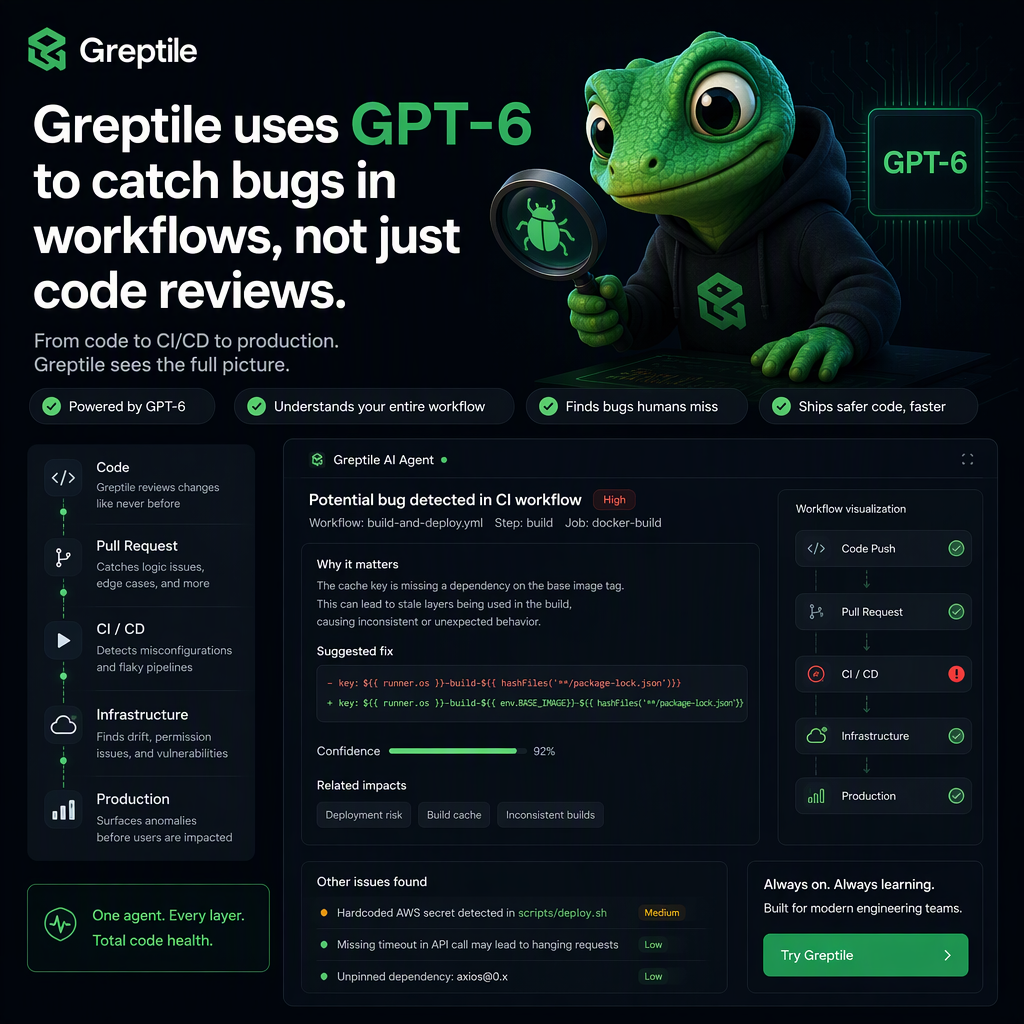
Greptile is out here flexing GPT-6 like a Swiss Army knife, but let’s not miss the bigger story: this is industrial automation turning workflows into data streams that AI owns, not workers. If Black technologists aren’t in these rooms, we’re watching our labor patterns get optimized into somebody else’s profit margins, again.
🤖 AI’s Workflow Power Play
The AI industry loves its buzzwords. ” And now, Greptile is out here claiming GPT-6 Astra can catch bugs in workflows, not just code. It sounds slick, but let’s talk about what this really means, for tech, for trust, and for people who don’t get a press release when their job gets automated.
Greptile’s pitch is seductive: use AI not just to comb through code, but to simulate user workflows and spot issues before they become costly. At first glance, it sounds like a win. Less human error, more efficiency, fewer rework cycles. But efficiency for whom? This isn’t just a tool for debugging, it’s an escalation in the way corporate AI is quietly reshaping labor.
Testing workflows used to be a human job, full stop. You needed someone who understood not just the code but the context, the nuance of real-world interactions. Now, GPT-6 Astra claims to understand all that, running simulations that mimic user behavior. But what happens when “mimic” replaces “empathize”? When the nuance gets flattened into patterns the machine can predict, but not truly understand? This isn’t just about catching bugs; it’s about who gets sidelined in the process. Human testers, many of them contract workers or folks navigating less glamorous corners of tech, aren’t just losing tasks, they’re losing relevance. The machine doesn’t just debug the system; it becomes the system.
Security, they say, is another win. Greptile’s using GPT-6 Daybreak to spot vulnerabilities in infrastructure. No one’s arguing against better security, especially when breaches can wreck lives, not just servers. But let’s zoom out. AI-driven security means the rules of the digital game are increasingly set by systems trained on historical data. And what’s missing from history? The Black and brown folks whose concerns never got documented, whose vulnerabilities weren’t even considered as edge cases.
Human testers, many of them contract workers or folks navigating less glamorous corners of tech, aren’t just losing tasks, they’re losing relevance. The machine doesn’t just debug the system; it becomes the system.
When AI shapes security policies, it tends to replicate what’s already there, good or bad. It doesn’t ask who the policies protect, or who gets left exposed.
Then there’s Codex, the AI that’s supposedly cutting down on rework and streamlining projects. In the short term, sure, it sounds like a win for developers. Faster cycles, smoother workflows. But here’s what’s looming: fewer iterations means fewer chances for human creativity to shine. Rework isn’t just a nuisance; it’s often where innovation happens, where someone spots a possibility the AI couldn’t predict. Greptile’s framing this as progress, but it’s progress that prioritizes speed over depth, predictability over imagination. The endgame of AI-driven efficiency isn’t just fewer bugs; it’s fewer people in the room making decisions.
This is the pattern we’ve seen every time a new AI system gets hyped. Efficiency is the buzzword, but displacement is the real outcome. The humans who get pushed out, the testers, the QA folks, the security analysts, aren’t just losing their roles; they’re losing the chance to shape the systems that dictate how the rest of us live and work. And let’s be clear: those systems aren’t neutral. They’re built by corporations whose bottom line doesn’t include protecting marginalized communities. When workflow testing becomes automated, it’s not just a tech upgrade; it’s a shift in power. Greptile isn’t just debugging its code, it’s deciding who matters in the process.
So what does this mean for our community? It means we can’t afford to sit on the sidelines and let AI quietly rewrite the rules. If you’re in tech, ask hard questions about who’s being pushed out and what the systems you’re building are replicating. If you’re not, pay attention anyway, because these changes don’t stop at the office. They ripple out to how we access services, how we navigate institutions, how we’re surveilled and policed. AI isn’t just about tools; it’s about control. And if we’re not naming that, we’re letting someone else decide who wins and who gets erased.
🤖 Workflow QA Wizardry
GPT-6 is out here doing QA for workflows while humans still argue over who clicked ‘reply all’ last. Efficiency, thy name is algorithm.
⚡ Equity in the Code
Black engineers and developers already face structural exclusion in tech pipelines. Tools like Greptile’s GPT-6 Astra could shift the equity equation by democratizing access to advanced workflow testing and code optimization, but only if we’re in the ownership seat. The question isn’t just who uses it, it’s who profits from it.